
Yarns over the Yardrails
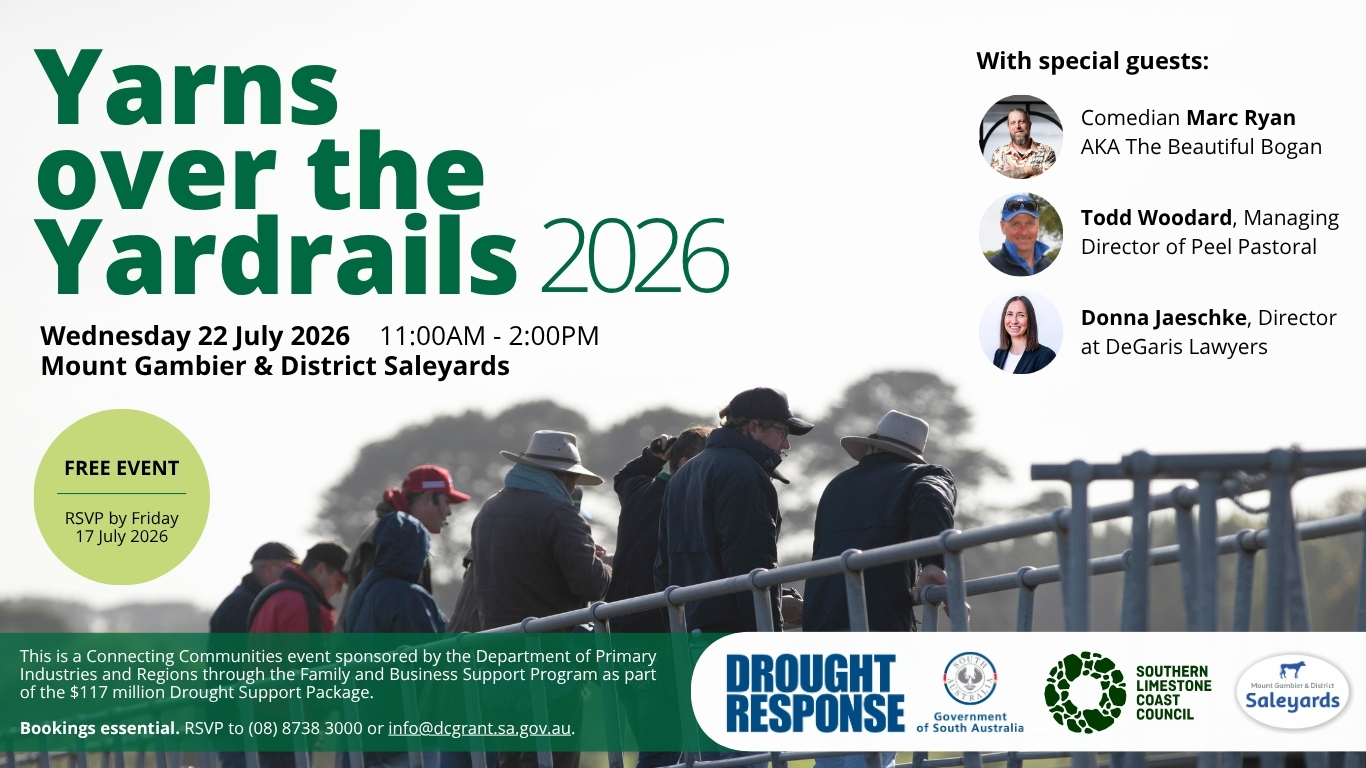
Yarns over the Yardrails is back for 2026 - join us for a feed and stay for a yarn.
Come along on Wednesday 22 July from 11:00pm - 2:00pm for a chance to talk, listen and connect over a free meal with others who understand the challenges of life on the land. Share a laugh and learn from our guest speakers. See a full program of the day's conversations here.
Bookings are essential for catering purposes. RSVP by Friday 17 July 2026 to Council's Community Development team on (08) 8738 3000 or info@dcgrant.sa.gov.au.
This is a Connecting Communities event sponsored by the Department of Primary Industries and Regions (PIRSA) through the Family and Business Support Program as part of the $117 million Drought Support Package.
PIRSA have a range of supports and resources available for farmers and primary producers which are listed below.
Drought support and resilience
Drought is a recurring feature of the Australian landscape, a cycle in which we are either preparing for drought, in drought or recovering from drought.
Find resources and support from the Department of Primary Industries and Regions to help you manage farm business, livestock, crops, and soil, as well as develop community resilience, including:
- Drought support package
- Managing drought
- Future Drought Fund programs
- Government roles
- Caring for livestock in heatwaves
- Mental health and wellbeing
Drought Mental Health Support Program
The South Australian Government’s Drought Mental Health Support Program will support farmers and communities affected by the ongoing drought.
The program, delivered by SA Health together with the Department of Primary Industries and Regions and Preventive Health SA, aims to provide people, families and communities with a range of resources to support their mental health and wellbeing.
Through this program, you can access:
- community-based activities that focus on connection and reducing isolation
- individual counselling and group-based supports to strengthen relationships, and support families and communities to respond to mental health needs
- culturally safe services for Aboriginal communities and culturally and linguistically diverse communities, including newly arrived migrant communities and seasonal workers.
Support is flexible and can be offered face-to-face, virtually (telehealth), or through mobile outreach services.